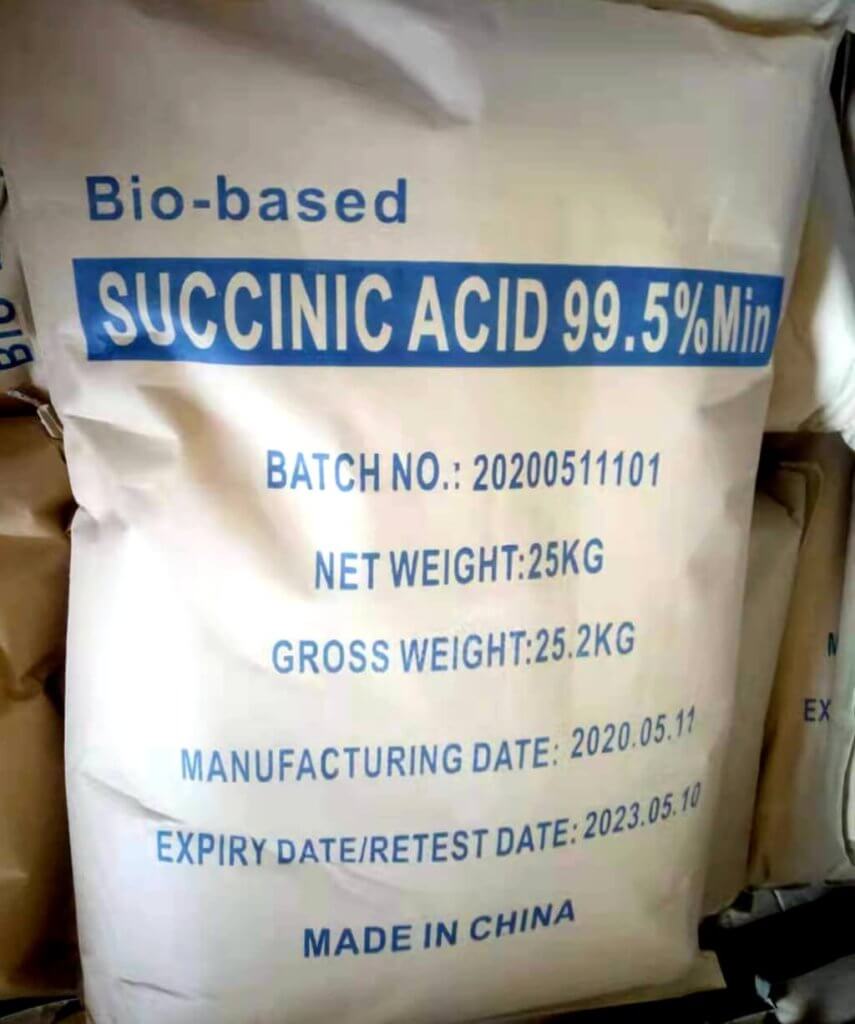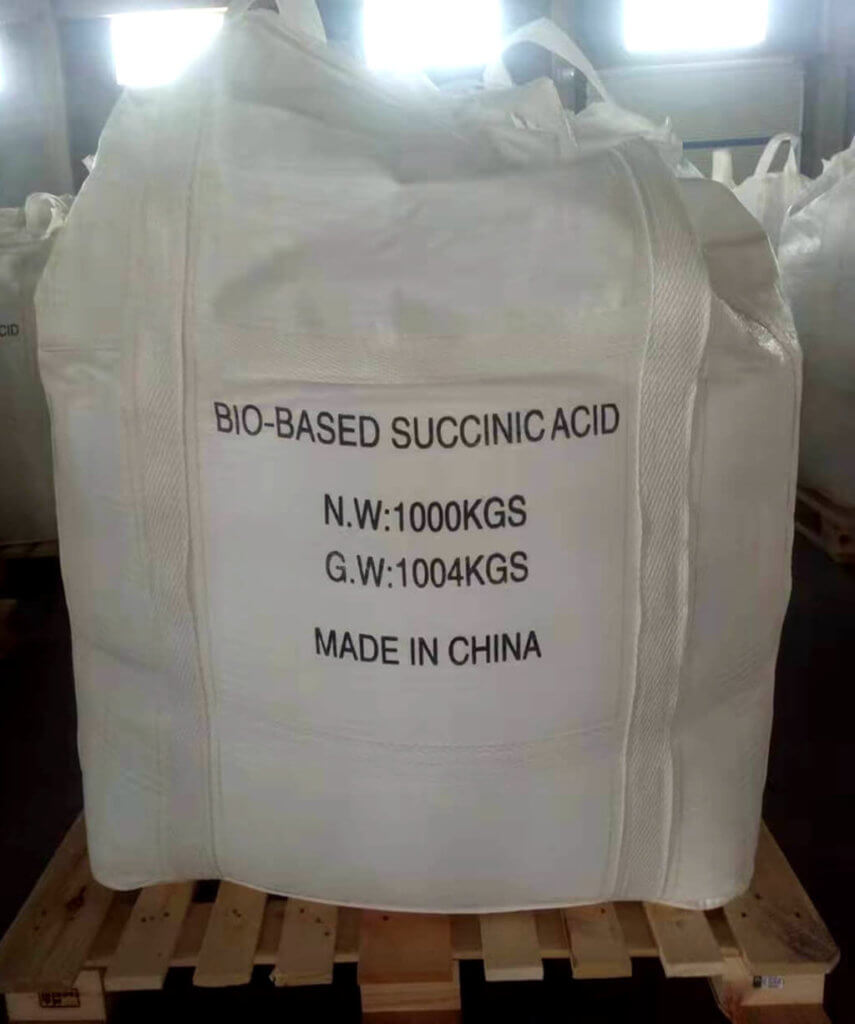
Bio-based succinic acid is becoming an increasingly important renewable building block for biodegradable polymers, polyurethane systems and other specialty chemical applications. Compared with conventional fossil-based succinic acid, bio-based succinic acid can provide the same core chemical functionality while helping manufacturers move toward more sustainable material solutions.
At Senthos, our Bio-based Succinic Acid (CAS 110-15-6) is supplied for applications including PBS, PBSA, polyester polyols, polyurethane systems, coatings, resins and related polymer materials.
For product specifications and commercial inquiries, please visit our Bio-based Succinic Acid product page.
What Is Bio-based Succinic Acid?
Succinic acid is a four-carbon dicarboxylic acid used as an intermediate in many polymer and chemical processes. When produced from renewable biological feedstocks, it is commonly referred to as bio-based succinic acid.
Because of its two carboxylic acid groups, succinic acid can participate in esterification reactions and is particularly useful in the production of polyesters and polyester polyols.
This makes bio-based succinic acid suitable for applications where manufacturers want to reduce reliance on fossil-based raw materials without changing the final material’s basic chemistry.
Bio-based Succinic Acid for PBS
One of the most important applications of bio-based succinic acid is the production of polybutylene succinate (PBS).
PBS is an aliphatic polyester produced from succinic acid and 1,4-butanediol. It is widely studied and used as a biodegradable polymer for packaging, films, bags, agricultural materials and other applications. Bio-based succinic acid can be used as a renewable raw material in PBS production, helping increase the bio-based content of the final polymer. Roquette Frères
PBS is valued for a combination of flexibility, processability and mechanical performance, which makes it suitable for both biodegradable and durable polymer applications. Roquette Frères
For manufacturers developing more sustainable polyester systems, bio-based succinic acid provides a practical route to partially bio-based PBS.
Bio-based Succinic Acid for PBSA
Bio-based succinic acid can also be used in the production of polybutylene succinate adipate (PBSA).
PBSA is related to PBS but incorporates adipic acid into the polymer structure. Compared with PBS, PBSA generally has lower crystallinity and greater flexibility, which can make it suitable for film and flexible packaging applications.
Using bio-based succinic acid as one of the monomers can help increase the renewable content of PBSA formulations.
For producers of biodegradable films and flexible materials, this makes bio-based succinic acid an important renewable feedstock option.
Bio-based Succinic Acid for Polyurethane and Polyester Polyols
Another important application is the production of polyester polyols for polyurethane systems.
Bio-based succinic acid can function as a renewable di-acid in polyester polyol synthesis. These polyester polyols can then be used in polyurethane applications including coatings, adhesives, elastomers, foams and microcellular polyurethane systems. Roquette Frères
Compared with conventional fossil-based acids, bio-based succinic acid can help increase the renewable content of polyurethane raw materials while maintaining the required polyester chemistry.
This makes it relevant for manufacturers working on:
- Polyurethane coatings
- Adhesives
- Elastomers
- Flexible and rigid foams
- Microcellular polyurethane
- Specialty polyurethane formulations
Other Applications of Bio-based Succinic Acid
Beyond PBS, PBSA and polyurethane, bio-based succinic acid can also be used in:
- Polyester and alkyd resins
- Coating formulations
- Composite resins
- Plasticizers
- Specialty solvents
- Chemical intermediates
- Polymer modification
- Selected pharmaceutical and food-related applications
Commercial bio-based succinic acid products are also promoted for coatings, resins, plasticizers and other specialty chemical systems. Roquette Frères
Because succinic acid is a versatile platform chemical, its application range extends well beyond a single polymer family.
Why Bio-based Succinic Acid Is Important for Sustainable Materials
The main value of bio-based succinic acid is that it provides a renewable alternative to conventional fossil-derived chemical intermediates.
For polymer manufacturers, this can help support:
- Higher renewable content
- Development of biodegradable polyester systems
- Reduced dependence on fossil-based raw materials
- More sustainable polyurethane and resin formulations
- Broader use of renewable chemical building blocks
Research and commercial development continue to expand the role of bio-based succinic acid in biodegradable polymers and sustainable materials.
Senthos Bio-based Succinic Acid
Senthos supplies Bio-based Succinic Acid (CAS 110-15-6) for industrial applications, including PBS, PBSA, polyurethane, polyester polyols, coatings and resins.
Typical applications include:
- PBS and PBSA biodegradable polymers
- Polyester polyols
- Polyurethane systems
- Coatings and resins
- Plasticizers
- Specialty chemical intermediates
For technical specifications, samples or commercial inquiries, please visit our Bio-based Succinic Acid product page or contact Senthos directly.